A This Lupie Life Perspective
Before I get out of bed, I’m already working out what I might manage. How tired do I feel? How sore are my joints? What have I planned, and what could wait?
I think of this as checking my spoons. It helps me put words to the decisions I make when I don’t have enough energy for everything.
Working Out What I Can Manage Today
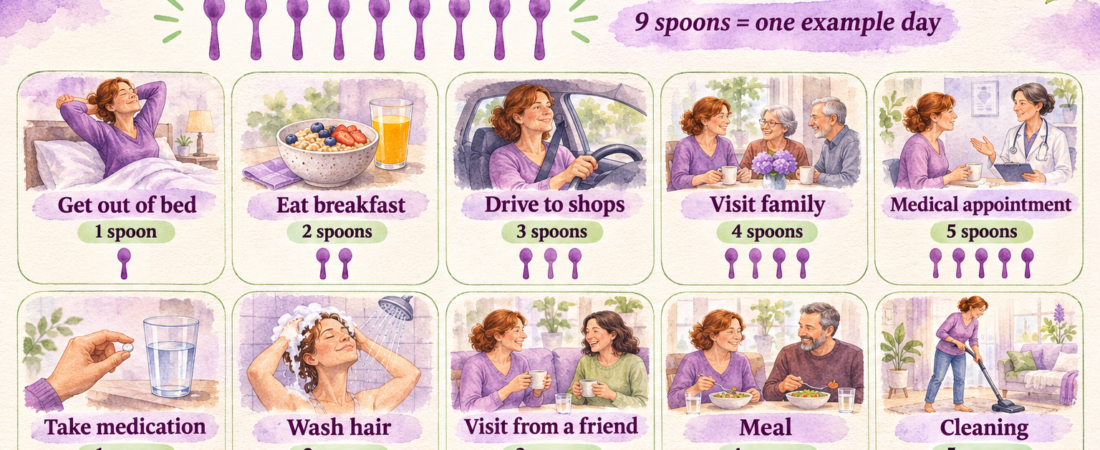
I might describe a better day as having twelve spoons and a harder day as having six. Those numbers are just examples. I don’t wake up knowing exactly how much energy I have, and I can feel different a few hours later.
If I imagine a shower taking two spoons, that helps explain why I might need to rethink cooking dinner. It doesn’t mean every shower takes the same effort, or that I can work out the rest of my day by subtracting two.
A bad night of joint pain, stress or too much going on around me can make things harder. I try to take that into account rather than expecting to manage something simply because I managed it yesterday.
Deciding What Can Wait
When I’m struggling, I ask myself what needs doing today, what could be made easier and what I could ask someone to help with.
A frozen meal means I can eat without standing at the stove to cook from scratch. Leaving the laundry in the basket means one less job for now. If having a shower has taken most of what I can manage, the rest of the list needs another look.
These decisions aren’t always easy. I can still feel guilty about leaving things or worry about disappointing someone. I’ve spent a lot of time pushing through because I think I should be able to do more.
Checking my spoons gives me a way to pause and ask whether the plan still fits how I’m feeling. Sometimes I do a smaller version of the job. Sometimes I ask for help. Sometimes I leave it.
The Numbers Are Only Part of the Explanation
I can’t calculate my way to a predictable day with lupus. A spoon count can’t tell me whether I’ll have a flare, how severe it might be or how long I’ll need to recover.
For me, the point is to notice what everyday activities take out of me and make decisions with that in mind. It also gives me a way to explain why doing one thing might mean leaving something else.
I don’t always get the balance right. But it helps me look at what I can manage today, instead of judging myself by everything on my list.
Spoon Theory Explained
Spoon Theory comes from writer Christine Miserandino, who used spoons to help a friend understand her experience of living with lupus. The spoons represent limited energy and the choices involved in getting through everyday activities.
I use the idea to explain my own experience, rather than as a set of rules. Any spoon counts I give are illustrative: the effort an activity takes can change from day to day, and someone else’s experience may be very different from mine.
Spoons are a metaphor, not a medical measurement or a predictable formula for energy, recovery or flares. Using fewer spoons does not guarantee a flare-free day, and having a flare does not mean I planned badly.